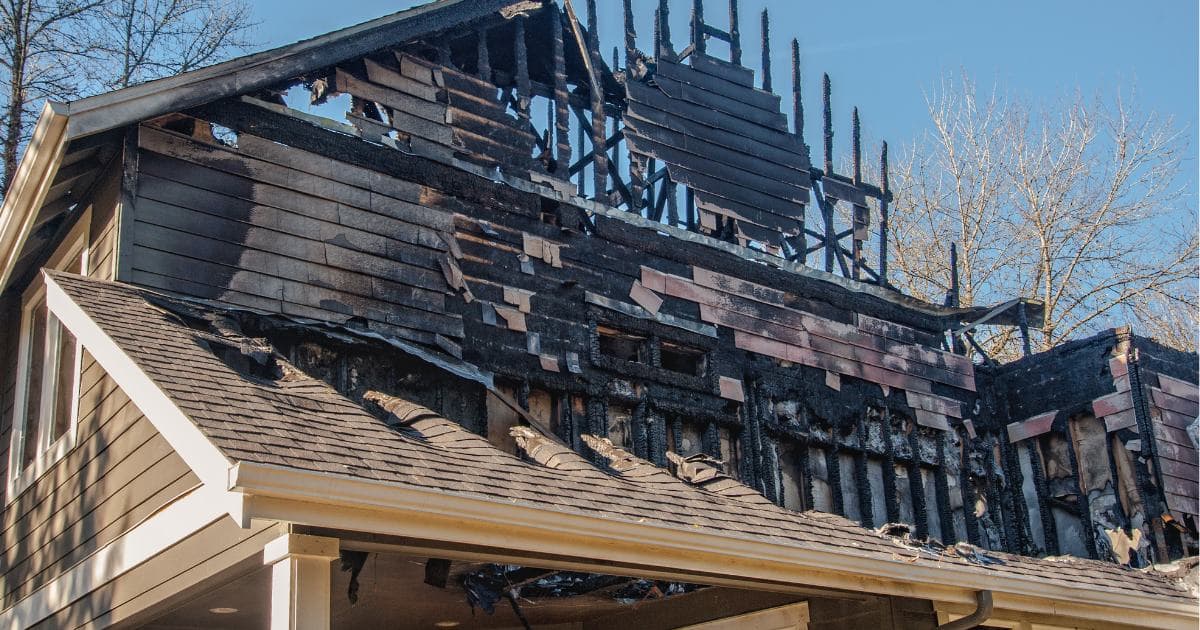
Fire damage restoration timelines range from days for smoke-only cleanup to months for full structural rebuilds. Here is how Ventura County fire restoration actually unfolds, phase by phase.
Fire damage restoration takes anywhere from a week for isolated smoke damage to nine months or more for full structural rebuilds after a major loss. The honest answer to "how long" is that it depends entirely on scope, insurance coordination, and whether construction follows restoration. What is predictable is the sequence. Every fire restoration job runs through the same five phases. Knowing the phases, and what each one requires, tells you where your project sits and where the realistic finish date lands.
Phase 1 — Emergency Stabilization (Same Day)
Once fire officials clear the structure for entry, stabilization is the first move. Board-up over broken windows and burned-out openings. Tarping over compromised roof sections. Fencing around the property if it is uninhabitable. These measures keep weather, animals, and uninvited visitors out while the real work is planned.
For a smoke-only loss with no structural damage, this phase is minimal. For a total loss, it is mandatory within 24 to 48 hours — water intrusion during the first post-fire storm can double the damage. Heartland handles this day-one scope as part of the response for any fire loss in Thousand Oaks, Camarillo, or anywhere else in Ventura County.
Phase 2 — Assessment and Documentation (1 to 3 Days)
The second phase is slower and more important than it looks. A restoration technician walks the structure, identifies affected materials, categorizes smoke type (natural, synthetic, protein), photographs everything, and builds a scope of work in Xactimate. Moisture readings go down if firefighting water is in play. Air quality is sampled if soot contamination is heavy. Structural engineering may be called in for loads, framing, and safety if the fire burned into structural members.
This phase produces the documentation the insurance adjuster reviews to approve the scope. Shortcut it and every downstream phase hits paperwork delays. Three days of thorough assessment prevents three weeks of dispute later. For major losses, this phase can extend to a week while engineering reports come back.
Phase 3 — Pack Out and Content Cleaning (1 to 2 Weeks)
Salvageable contents — furniture, clothing, electronics, personal items — come out of the structure and go to a clean environment for specialized cleaning. Clothing and textiles run through ozone chambers or professional laundering. Hard goods are cleaned by hand or with ultrasonic equipment for delicate items. Electronics are evaluated for soot damage and either cleaned or documented as total loss.
Unsalvageable contents are inventoried for the insurance claim with photo and description of each item. Homeowners often underestimate the value of full-inventory documentation — it is the difference between a settled claim and an argued one.
Two weeks is typical for a full-house pack out. Partial losses with contained smoke exposure are shorter.
Phase 4 — Structural Restoration (2 Weeks to 2 Months)
Once the contents are out and the scope is approved, demo and restoration of the structure itself begins. This phase varies enormously. A smoke-only job in a 2,000-square-foot home might run two to three weeks — HEPA filtration, encapsulation, hydroxyl treatment, HVAC cleaning, some drywall and insulation replacement in the worst-hit rooms.
A structural fire that reached framing, destroyed roofing, and compromised a portion of the house runs longer. Unsalvageable drywall and insulation come out. Framing is cleaned, scrubbed, and encapsulated or replaced. HVAC systems are cleaned or replaced. Cat-certified technicians work behind HEPA filtration running continuously so fine soot particles don't re-contaminate cleaned surfaces.
Heartland's team holds FSRT certification (Fire and Smoke Restoration Technician) along with AMRT, WRT, ASD, and CCT. Those certifications matter for this phase because fire restoration has more ways to go wrong than any other category. Missed soot behind a wall cavity reappears as smoke odor bleeding through fresh paint a year later.
Phase 5 — Rebuild and Construction (Weeks to Months)
Many fire jobs transition directly from restoration into rebuild. Drywall, insulation, flooring, cabinetry, paint, fixtures, trim — the finish work that makes the home livable again. A partial rebuild might take three to six weeks. A full rebuild on a substantial fire loss runs four to nine months depending on permitting, material availability, and insurance pace.
Heartland's construction department picks up the rebuild scope under one contract with one point of contact. You do not hand off from a restoration crew to an unfamiliar construction company. The same team that scoped the damage in Xactimate runs the rebuild — which means the scope of work and the rebuild match, and insurance draws release in sync. General construction after a covered loss is the single largest category we run.
Ventura County Wildfire Context
Ventura County has lived through the long version of these timelines. The Thomas Fire in December 2017 destroyed 1,063 structures across Ventura and Santa Barbara counties and burned 281,893 acres over nearly 40 days. The Woolsey Fire in November 2018 destroyed 1,643 structures across 96,949 acres in LA and Ventura counties, displacing over 295,000 people. The Mountain Fire in November 2024 damaged or destroyed roughly 370 structures, primarily in Camarillo Heights and Moorpark, with Heartland operating through the event and into the aftermath.
In every one of those events, restoration timelines depended heavily on three things: how quickly stabilization happened, how fast the insurance claim moved, and whether the rebuild went through the same contractor as the restoration. Homes that had a single contractor managing both sides finished months earlier than homes that coordinated separate restoration and construction vendors. That is the pattern we have watched play out in Ojai, Thousand Oaks, Agoura Hills, Camarillo, and Westlake Village for eight years now.
What Affects Your Timeline Most
- Scope of damage. Smoke only vs. partial structural vs. total loss.
- Insurance pace. Adjuster assignment, scope agreement, and draw release all have lead times. Xactimate documentation shortens this.
- Permitting. Rebuilds touching structural, electrical, or plumbing need permits. Ventura County and individual city building departments move at their own speeds.
- Material availability. Custom cabinetry, specialty windows, and architectural materials can add weeks.
- Contents pack out. Full-house pack outs with specialty items take longer than partial losses.
- Temporary housing. ALE (Additional Living Expense) coverage on your policy pays for temporary housing. Confirm the limit early so the timeline does not outrun your coverage.
Why Lingering Smoke Odor Means the Timeline Was Cut Short
The single most common post-fire complaint we hear from homeowners who worked with someone else is that the house still smells of smoke months after it was supposedly finished. This traces back to restoration timelines that got compressed — encapsulation skipped, framing cleaned but not sealed, HVAC not thoroughly decontaminated, hydroxyl treatment shortened or skipped. Smoke odor embeds in porous materials. Surface cleaning and painting over does not resolve it. Every FSRT-certified restoration crew knows this, but compressed timelines force shortcuts.
Our take: do the odor abatement and encapsulation work correctly even if it adds two weeks. A house that smells clean a year after restoration is worth more than a house delivered fast that still smells of smoke.
Dealing With This Now?
Heartland offers free estimates across Ventura County. Call 805-219-6732 or submit a request online.
Frequently Asked Questions
How long does smoke damage restoration take?
Smoke-only restoration — no structural damage, contained smoke exposure — typically runs one to three weeks. That covers HEPA filtration, encapsulation, hydroxyl treatment, HVAC cleaning, and selective material replacement. Whole-house smoke restoration after significant wildfire smoke intrusion can run longer, four to six weeks in many cases.
Can I live in my home during fire restoration?
Usually not during the active restoration phase. Air quality, soot, ongoing construction, and chemical treatments make the space unsafe or at least deeply inconvenient. Most homeowners invoke their ALE coverage and stay in temporary housing until the structural restoration phase is complete. Cosmetic rebuild phases are sometimes tolerable to be present for, but safer to be out.
Does insurance pay for temporary housing during fire restoration?
Yes, if your policy includes Additional Living Expense (ALE) coverage, which most standard policies do. ALE pays for hotel, rental housing, meals, and reasonable extra expenses while your home is uninhabitable due to a covered loss. Check your policy's limits — typically 20% to 30% of the dwelling coverage — because long restoration timelines can hit the cap. Confirm coverage amounts early.
What is the difference between restoration and rebuild?
Restoration cleans, treats, and preserves what was affected — smoke-damaged framing gets cleaned and encapsulated, salvageable contents get cleaned, HVAC gets decontaminated. Rebuild replaces what cannot be restored — drywall, insulation, flooring, cabinetry, fixtures. Most fire losses need both. Running both through one contractor is faster and cleaner than coordinating two.
How do I speed up my fire damage insurance claim?
Three things shorten a fire claim. First, document scope thoroughly and early — photos, video, contents inventory, and a Xactimate scope from your restoration contractor. Second, communicate proactively with your adjuster and respond to information requests same-day. Third, avoid scope disputes by walking the damage with the adjuster and your contractor together, so everyone agrees on scope upfront. Claims that stall almost always stall on scope disagreement. Clarity up front prevents that.