Mold can begin within 24 to 48 hours of a water loss. Here is how to spot the early signs in Ventura County homes — and why professional assessment matters more than a bottle of bleach.
Mold after water damage is not a hypothetical. The EPA and IICRC both confirm that mold can begin growing within 24 to 48 hours of water intrusion when materials are not properly dried. In coastal Ventura County, where marine-layer humidity keeps porous materials damp far longer than inland regions, that window is even shorter in practice. The signs often show up weeks or months after the original water loss — long after most homeowners assume the issue was resolved. Here is how to recognize mold after water damage, and why professional assessment is the right next move.
Why Mold Follows Water Damage
Water damage creates the two conditions mold needs to grow: moisture and a food source. Drywall, insulation, carpet padding, subflooring, wood framing, and ceiling tile are all porous and organic. Soak them, leave them wet, and you have an ideal environment for mold spores — which are already present in the air of every building on earth — to colonize.
The critical variable is drying speed. Materials dried below the moisture threshold within 24 to 48 hours generally stay mold-free. Materials that stay saturated for three days or more almost always develop mold, though it may stay invisible for weeks while it establishes itself inside walls and under flooring.
Visible Signs of Mold After a Water Loss
Visible mold shows up most often in the places where water pooled, wicked, or stayed trapped. Walk the areas that were affected by the original water damage and look for:
- Dark spots or patches on drywall, especially near the floor or at wall-to-floor transitions.
- Fuzzy growth on drywall, baseboards, or the underside of flooring — white, green, gray, or black.
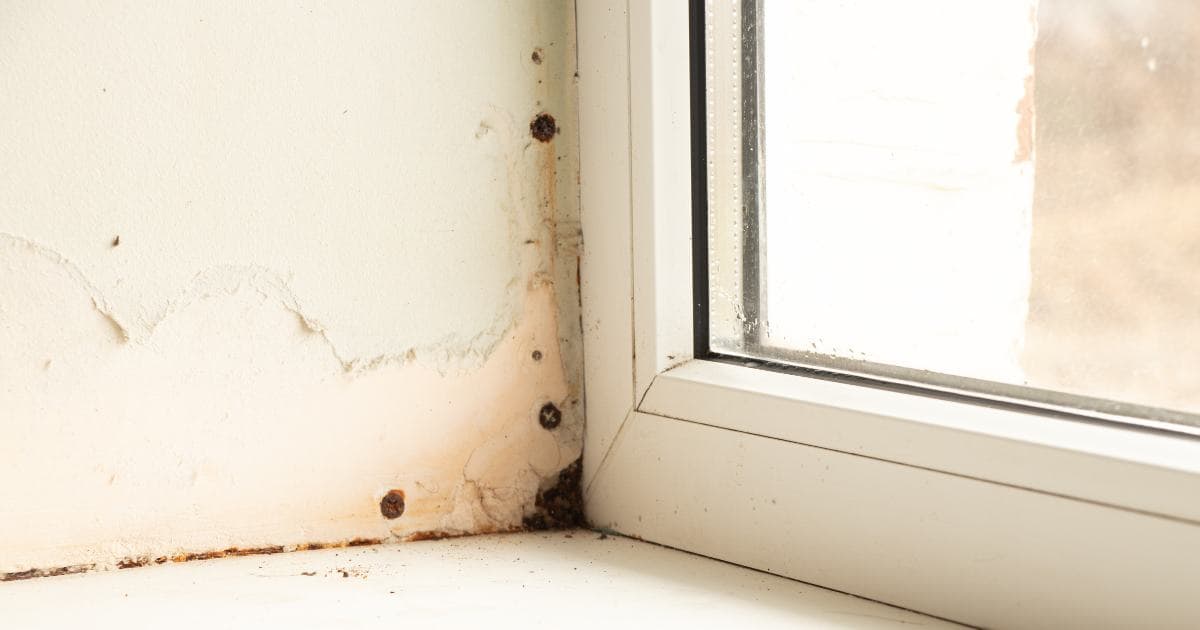
- Discoloration and staining on walls, ceilings, or around HVAC registers.
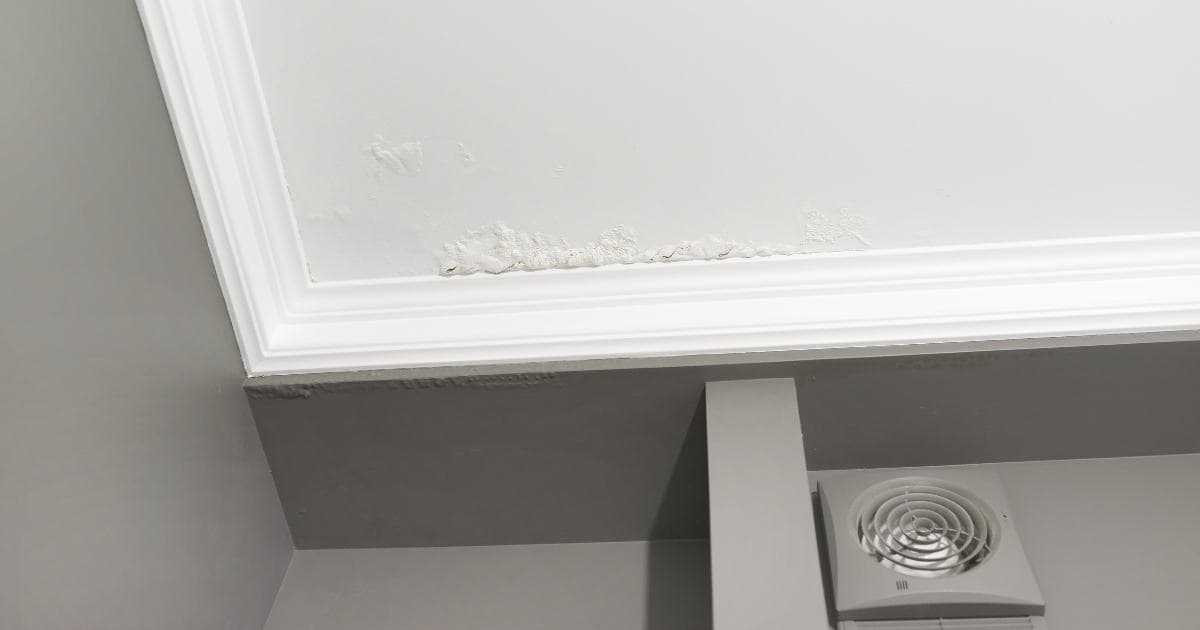
- Warping, buckling, or bubbling in paint, wallpaper, or drywall surfaces.
- Rust or corrosion on metal fixtures, which indicates ongoing moisture.
- Peeling paint in a localized area, often a sign moisture is migrating from behind.
Visible mold is the easy case. It tells you moisture is still present or was present long enough for growth. The harder case is mold that is not yet visible.
Hidden Signs — What You Smell Before You See
Most mold in Ventura County homes post-water-damage is hidden behind walls, under flooring, or inside HVAC ductwork. You smell it before you see it. Pay attention to:
- A musty, earthy odor that persists after cleaning. Like wet cardboard, damp basement, or decaying leaves.
- Odor that intensifies when the HVAC runs, suggesting mold in the ductwork or on coils.
- Odor concentrated in one room, usually the one affected by the original water loss.
- Unexplained allergy-like symptoms. Respiratory irritation, sneezing, congestion, skin rashes, or eye irritation that clear up when you leave the house and return when you come back.
- Pets acting unusual in specific areas — dogs and cats often react to mold before humans do.
A musty smell with no visible source usually means mold is colonizing inside a wall cavity, under flooring, or in the subfloor. It does not go away on its own.
Where Hidden Mold Hides
In homes that had water damage, the common hiding spots are predictable:
- Behind drywall, especially the bottom 12 to 24 inches near the floor where water wicks upward.
- Inside wall cavities that held wet insulation.
- Under vinyl, laminate, and engineered-wood flooring where moisture got trapped.
- In subflooring beneath carpet, especially at the pad.
- Inside HVAC ductwork and on coil surfaces if air was moved through wet areas.
- In attic spaces following roof leaks.
- Behind cabinetry, particularly under sinks and around dishwashers.
- On the back side of wallpaper in bathrooms and kitchens.
Finding hidden mold reliably takes moisture meters, thermal imaging cameras, and sometimes cavity inspections. Visual inspection alone is not enough.
Ventura County — Why Coastal Humidity Matters
Coastal neighborhoods in Ventura, Oxnard, Carpinteria, and Port Hueneme deal with marine-layer moisture on top of any water loss. Ambient humidity stays high enough — especially in May and June — that passive drying is slow even for materials that were not directly saturated. A water loss in a coastal home needs more aggressive mechanical drying than the same loss inland. Without it, the post-water-damage mold risk is real and persistent.
Inland communities see their own version of the same issue. Older housing stock in Santa Paula and Fillmore, with plaster walls and limited vapor barriers, retains moisture in ways newer construction does not. The mold risk profile is different, but no less real.
Why Professional Assessment Matters
Homeowners sometimes try to handle a musty smell or a small dark spot with bleach and a rag. This rarely ends well. Three reasons:
First, bleach does not kill mold on porous surfaces. It may kill what is visible on the surface and leave the hyphae — the root structure — intact in the substrate. The mold regrows.
Second, what you see is rarely the full extent. A spot the size of a quarter on the surface may correspond to a 12-square-foot colony inside the wall cavity. Poking at it without containment releases spores into the rest of the house.
Third, disturbing mold without containment spreads it. Mold disturbed during demolition or cleaning releases airborne spores that colonize new spaces. The job gets bigger, not smaller.
A proper assessment uses moisture meters to map residual moisture, thermal imaging to identify hidden wet zones, visual inspection, and sometimes air or surface sampling to characterize the scope. From there, the right remediation path gets specified.
Heartland's Role — Water Damage Assessment First
Heartland's team is IICRC-certified with AMRT, FSRT, WRT, ASD, and CCT credentials. When water damage work is done right the first time — proper drying, correct material removal, verified moisture readings — the downstream mold risk drops dramatically. That is the piece of the problem we own. If you had a water loss and are now smelling something musty, the right starting point is a water damage assessment — identify whether the original drying was complete, whether residual moisture is still present, and what scope of remediation the specific situation calls for.
If assessment finds remediation scope beyond our typical work, we tell you honestly and recommend the right path. The goal is not to chase every job. The goal is to fix the actual problem.
What to Do If You Suspect Mold After a Water Loss
- Do not disturb visible mold. No scrubbing, no bleach, no poking at it.
- Do not run the HVAC in the affected area if you can avoid it.
- Document everything — photos of what you see, notes on the musty smell, timeline of when you noticed symptoms.
- Reduce humidity in the affected room if possible.
- Call for a professional assessment. Get the moisture mapping and scope done before any cleanup begins.
- Review your insurance policy. Mold following a covered water loss is often covered up to a sub-limit, though policy language varies.
Dealing With This Now?
Heartland offers free estimates across Ventura County. Call 805-219-6732 or submit a request online.
Frequently Asked Questions
How quickly does mold grow after water damage?
Mold can begin growing within 24 to 48 hours of water intrusion when materials stay wet. That is EPA and IICRC guidance. Visible growth usually takes longer — days to weeks — because the colony has to establish before it becomes apparent on the surface. The fact that you do not see mold does not mean it is not growing.
Can mold grow inside walls after water damage?
Yes. Wall cavities that held wet insulation, or drywall that stayed saturated for more than 48 hours, are prime sites for hidden mold colonies. You often smell it before you see it — a musty odor with no visible source is one of the most reliable indicators. Professional moisture mapping confirms whether the cavity is still wet.
Is mold from water damage covered by insurance?
Standard homeowners policies in California often cover mold remediation when the mold resulted from a covered water loss, up to a sub-limit. Policy language varies widely. Mold from gradual or maintenance-related water issues is generally excluded. Read the mold sub-limit and exclusion wording carefully and document the original water loss event clearly. Proper drying at the outset is the best insurance — no mold colony means no mold claim.
How do I know if I have mold after a flood?
Watch for musty odor, visible discoloration or fuzzy growth, warped or buckling materials, peeling paint, and unexplained allergy-like symptoms. Any combination of these a few weeks after a water loss warrants a professional assessment. Moisture meters and thermal imaging give a much clearer picture than visual inspection alone.
What does mold smell like?
Musty, earthy, damp — similar to wet cardboard, a basement that has flooded, or decomposing leaves. The smell intensifies in enclosed spaces and when humidity rises. Some molds have stronger odors than others, and some people are more sensitive to the smell. If someone in the household consistently notices a musty smell that others do not, take it seriously.
What should I do while I wait for a professional odor and moisture assessment?
Keep humidity as low as possible — run a dehumidifier if you have one, keep windows closed during humid periods, and avoid running the HVAC through the affected area. Do not disturb visible mold. Document what you observe. Avoid making the situation worse while the assessment is being scheduled.