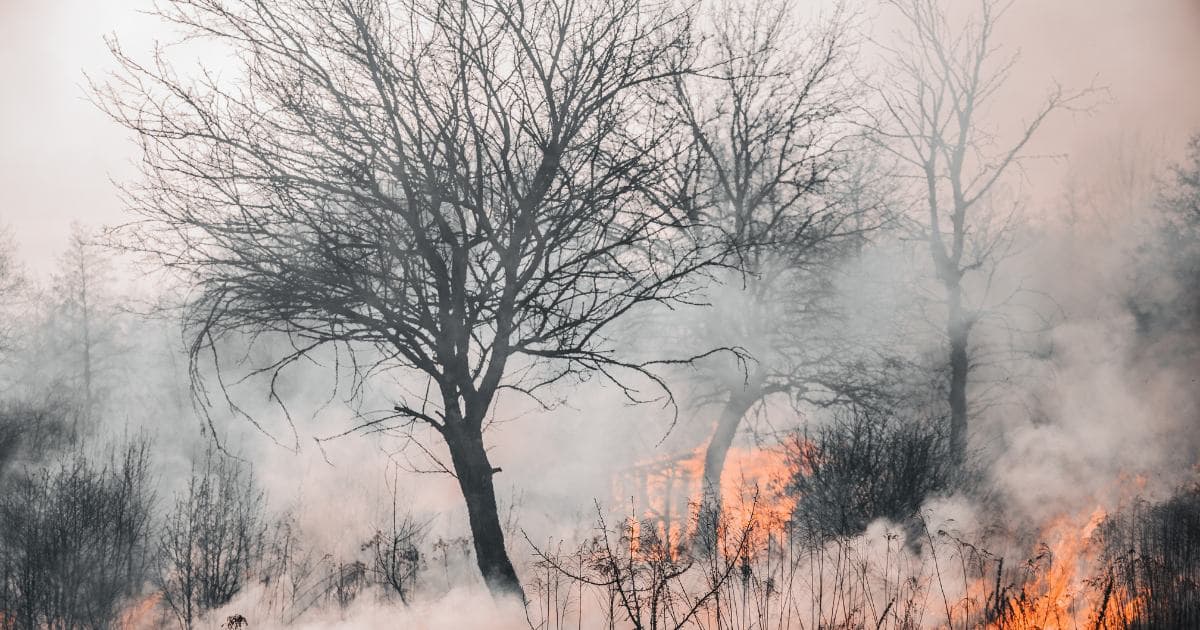
Wildfire smoke damages homes miles from the burn zone. Here is what Ventura County homeowners and business owners need to know about smoke intrusion, insurance coverage, and professional treatment.
Wildfire smoke damages homes that never saw flames. In Ventura County, where the Thomas Fire, Woolsey Fire, Easy Fire, and Mountain Fire have all shaped the last decade, homeowners miles from any burn perimeter have dealt with smoke intrusion, persistent odor, and contaminated HVAC systems. The damage is real, it does not resolve with candles or air fresheners, and it is usually covered by insurance — but only if the scope is properly documented. Here is what Ventura County homeowners and business owners should know.
Smoke Travels Farther Than Fire
During the Thomas Fire in December 2017, smoke plumes reached Santa Barbara and drifted across Ventura County for nearly 40 days. Homes in Ventura, Ojai, Fillmore, and Santa Paula that never saw active fire still ended up with smoke-damaged interiors. The Woolsey Fire in November 2018 sent smoke across Agoura Hills, Thousand Oaks, Westlake Village, and far beyond into LA County. The Mountain Fire in November 2024 pushed smoke across Camarillo, Moorpark, and Somis — most dramatically into Camarillo Heights, which took the worst of the structural damage.
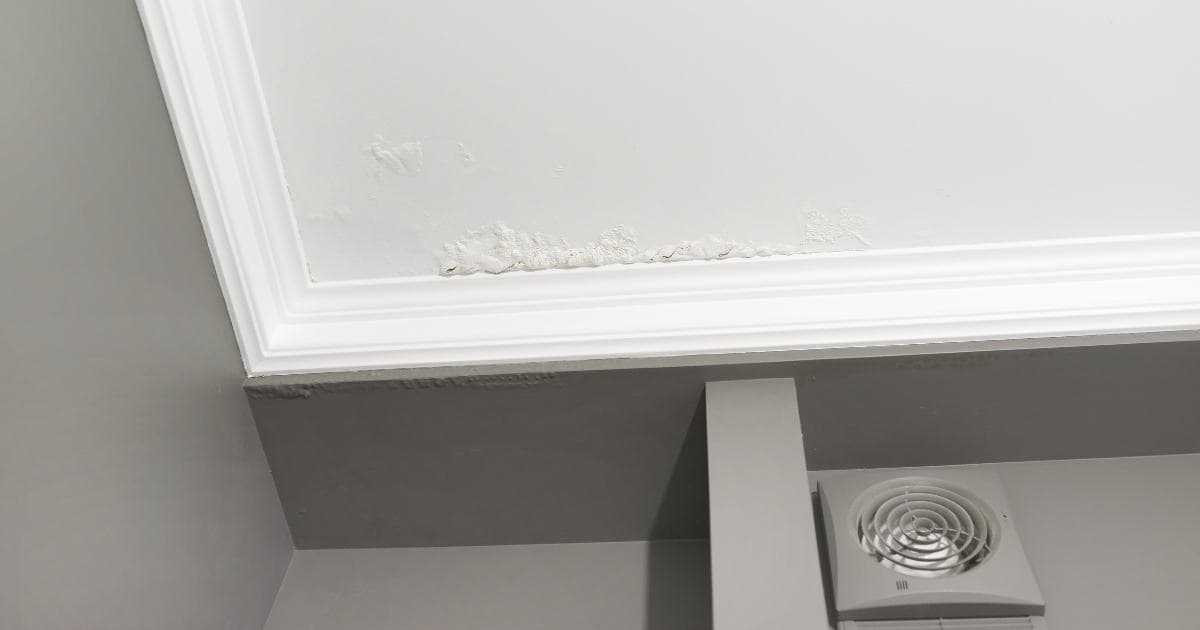
Smoke is not just what you see outside. It is what infiltrates your attic vents, your HVAC intake, your window and door gaps, and every porous material inside the house. It embeds in drywall, insulation, framing, carpet, upholstery, clothing, and bedding. By the time the air outside clears, the inside of the home carries the event for weeks, months, or — without professional treatment — years.
How Smoke Embeds in Materials
Smoke residue is a mix of fine particulates and volatile organic compounds. Particulates are microscopic soot particles that settle on and penetrate porous materials. VOCs are chemical compounds that off-gas slowly over time. Together they produce the smell, the film on hard surfaces, and the respiratory irritation wildfire smoke creates.
Porous materials behave like sponges. Drywall absorbs both soot and VOCs into its surface and gypsum core. Insulation — fiberglass, cellulose, spray foam — all capture contaminants and hold them. Framing, particularly older wood, takes in VOCs and slowly releases them back into the air for years. Textiles hold onto smoke residue until they are cleaned or discarded. HVAC systems pull contaminated air through ductwork and coils, then recirculate whatever is not captured by filtration.
None of this resolves on its own. Passive ventilation helps but does not eliminate. Surface cleaning removes the surface layer and leaves the embedded residue.
Why Air Fresheners and Surface Cleaning Do Not Work
The most common mistake homeowners make post-wildfire is spending money on products that mask odor instead of removing it. Plug-in air fresheners, ozone room sprays, scented candles, and surface cleaners all address the surface layer. Meanwhile the actual source — embedded soot and VOCs in porous materials — continues off-gassing.
Within days, the masking effect fades and the smoke smell returns. This is why homeowners who try to DIY a wildfire smoke problem often end up calling a professional six months later, after spending hundreds on products that did not solve the problem.
Professional Methods That Actually Work
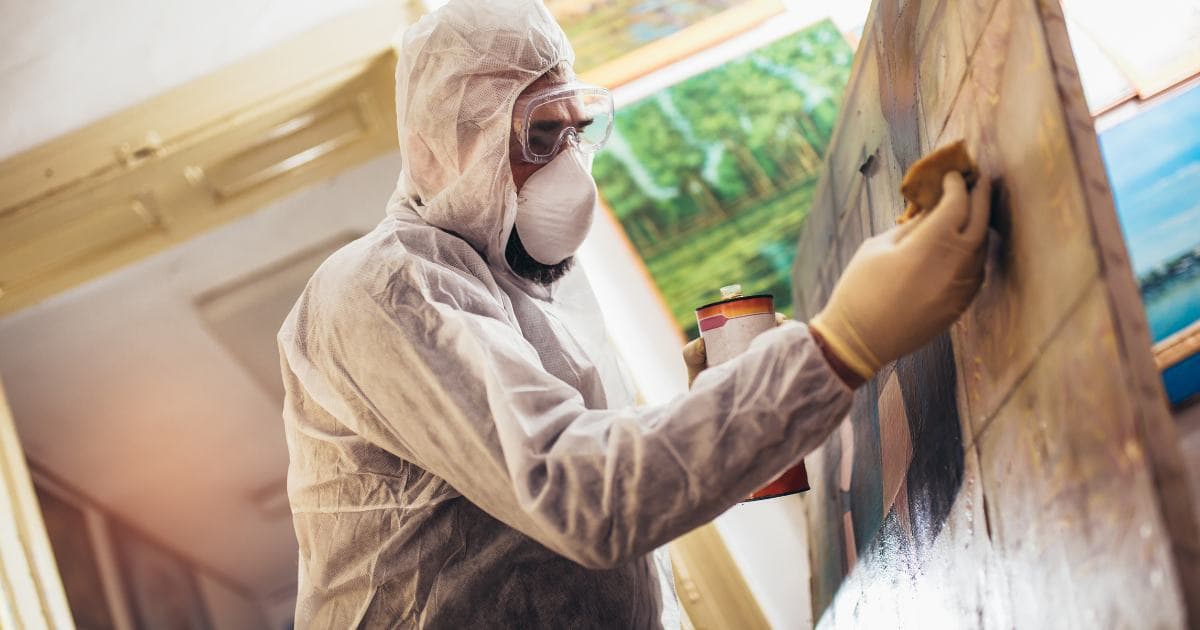
Professional odor abatement for wildfire smoke uses a combination of methods matched to the affected materials and the scope of intrusion.
- Hydroxyl generators. Produce hydroxyl radicals that neutralize odor molecules at the source. Safe to run with occupants present, which is why hydroxyls are preferred for whole-home treatment over multiple days.
- Ozone generators. Highly effective on stubborn odor but require vacating the treated space. Often used in commercial applications or unoccupied structures.
- Dry fogging and wet fogging. Deliver deodorizing agents in vapor form that penetrate porous materials the same way the smoke did, reaching the embedded residue.
- Encapsulation. Specialized sealants applied to framing, subfloor, and other substrates to lock in residual compounds so they cannot continue off-gassing. Skipping encapsulation is the number one reason post-fire smoke odor comes back six months later under fresh paint.
- HEPA and carbon filtration. Air scrubbers run continuously during the project to capture airborne particulates and VOCs. HEPA handles particulates; activated carbon handles gases.
- Thermal fogging. Heat-vaporized deodorizing agents that penetrate deeply into porous materials. Effective for stubborn cases.
- Chemical cleaning. Appropriate chemistry applied to the type of smoke — natural, synthetic, or protein — on hard and semi-porous surfaces.
A full wildfire smoke restoration combines several of these based on what a site walk reveals. The right combination depends on whether the smoke exposure was direct flame contact, adjacent smoke plume, or distant airborne drift.
HVAC Systems — Often Overlooked, Always Critical
HVAC ductwork and coils are the most commonly missed part of a wildfire smoke restoration. The system pulled smoke-laden air through the house during the event, and soot deposits on duct walls, registers, and especially on the cooling coils and blower housing. Every time the system runs afterward, it recirculates residual contaminants and re-contaminates surfaces the restoration team just cleaned.
A thorough post-smoke restoration includes professional HVAC cleaning — or replacement of ducts and filters if contamination is severe. Skipping this step is why some homeowners report the smell coming back every time the AC or heater runs for the first cold stretch after restoration.
Fire Damage vs. Smoke Damage — Different Problems
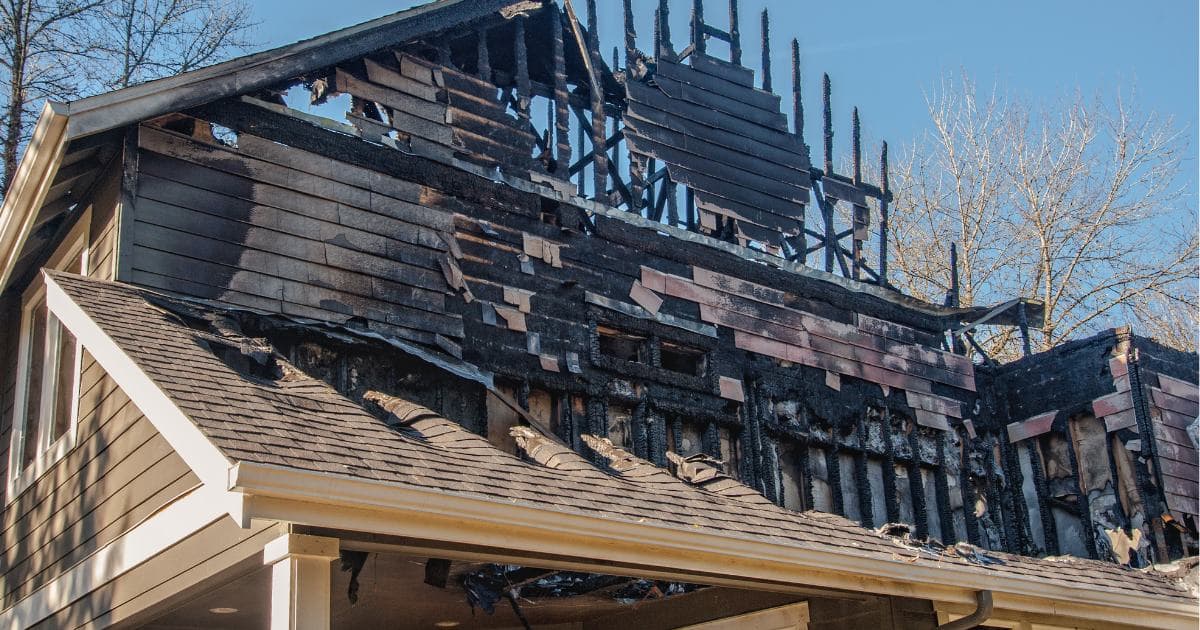
A structure that actually burned has fire damage — charred framing, destroyed drywall, compromised structural elements, and severe soot throughout. A structure miles from the burn that received smoke intrusion has smoke damage — no structural burn, but embedded residue and odor throughout porous materials and HVAC. Both come out of a wildfire event. Both are typically covered by insurance. The restoration scope is different for each.
Heartland's team is FSRT certified for fire and smoke restoration along with AMRT, WRT, ASD, and CCT. For the structures that burned, fire damage restoration runs the full stabilization, assessment, pack-out, demo, cleaning, encapsulation, and rebuild scope. For smoke-only structures, the scope focuses on filtration, HVAC cleaning, hydroxyl treatment, encapsulation where warranted, and content cleaning.
Local Context — Ventura County Wildfire Corridor
The communities that have taken repeat smoke events in the last decade form a recognizable corridor:
- Ojai — directly affected by the Thomas Fire, with smoke persisting in homes for months afterward. Ojai's narrow valley geography traps smoke and holds it longer than open terrain.
- Santa Paula and Fillmore — Thomas Fire ignition area, heavy smoke exposure.
- Thousand Oaks, Westlake Village, and Agoura Hills — Woolsey Fire corridor. Many homes in these communities went through full restoration timelines; many more dealt with smoke-only scope.
- Camarillo and Moorpark — Mountain Fire 2024. Camarillo Heights took the worst structural losses; the broader Camarillo / Moorpark / Somis area dealt with smoke intrusion and HVAC contamination.
- Simi Valley — Easy Fire 2019 near the Reagan Library. Smaller event but localized smoke and evacuation impact.
Every one of these events produced the same pattern: structures that did not burn still needed professional smoke restoration. Homeowners who addressed it early with FSRT-certified restoration finished the work in weeks. Homeowners who assumed it would clear on its own often made the call a year later, at greater expense and with the odor more deeply embedded.
Insurance Coverage for Wildfire Smoke
Wildfire damage — including smoke-only damage to structures that did not burn — is covered by most standard California homeowners policies. Coverage includes restoration scope, pack out, content cleaning, HVAC decontamination, and odor treatment. The scope of the claim, however, depends entirely on documentation.
Heartland documents every wildfire smoke restoration in Xactimate, the format California insurance adjusters prefer. That includes HVAC cleaning scope, hydroxyl run time, encapsulation square footage, and content inventory. A well-documented claim moves through approval faster and captures the full scope, not just the visible damage.
Dealing With This Now?
Heartland offers free estimates across Ventura County. Call 805-219-6732 or submit a request online.
Frequently Asked Questions
Can wildfire smoke damage my home even if it didn't burn?
Yes — and this is the most underestimated part of wildfire restoration. Smoke plumes from events like the Thomas Fire and Woolsey Fire traveled miles and infiltrated homes through HVAC intakes, attic vents, and building gaps. The resulting damage to porous materials, HVAC systems, and contents is real and typically covered by insurance.
How do I get smoke smell out of my house after a wildfire?
Professional treatment — hydroxyl or ozone generation, encapsulation of framing and substrates, HVAC cleaning, content cleaning, and HEPA and carbon filtration. Surface cleaning and air fresheners mask the smell but do not remove embedded residue. The smoke molecules are inside the materials, not just on the surface.
Does insurance cover smoke damage from nearby wildfires?
Yes, in most cases. Standard California homeowners policies cover wildfire damage including smoke damage to structures that did not burn. Document the damage thoroughly, have a restoration contractor build the scope in Xactimate, and file the claim with clear reference to the specific wildfire event.
How long does wildfire smoke odor last in a home?
Without professional treatment, wildfire smoke odor can persist for a year or more, sometimes permanently, as VOCs slowly off-gas from porous materials. With professional FSRT-certified treatment — hydroxyls, encapsulation, HVAC cleaning — most smoke odor issues resolve within a few weeks.
What is a hydroxyl generator and how does it remove odor?
A hydroxyl generator uses UV light to produce hydroxyl radicals — short-lived molecules that react with and neutralize odor compounds at the molecular level. Unlike ozone, which also works but requires the space to be vacated, hydroxyls are safe for people, pets, and plants. They can run continuously throughout an occupied space, which is why they are the preferred whole-home treatment for wildfire smoke restoration.